



Mobile internet pricing still shapes how people work, learn, and stream across Africa. If you are comparing options for travel, remote work, or building a startup in the region, understanding where value lies matters. In this piece I break down affordability, real-world cost per GB, and how to find the best cheapest data plans in south africa vs nigeria for your needs, with practical tips and verified sources.
Quick snapshot: which country is cheaper right now
Short answer, Nigeria generally offers lower average cost per gigabyte than South Africa, but the picture is nuanced. Market competition, promotional bundles, and bundle sizes change the effective price per GB. Several recent analyses place Nigeria among Africa’s cheapest markets on a per-GB basis, while South Africa’s average per-GB price sits noticeably higher in many comparisons. For travelers and heavy users, big bundles and promotions often deliver the best per-GB value.
Why the numbers differ, explained
Market structure and competition
- Nigeria benefits from intense price competition among several large operators and a massive prepaid user base, which drives aggressive bundle pricing. For context, local coverage of tariff changes shows operators reshaping bundles frequently to retain subscribers.
- South Africa has consolidation among a few big players and higher operating costs in some segments, which can push retail prices up despite recent spectrum auctions and regulatory moves to encourage competition.
Currency and purchasing power
A cheap-looking dollar price can still be expensive relative to local incomes. Nigeria’s lower cost per GB in dollar terms often translates into better nominal affordability, but inflation, exchange rates, and device costs change the lived experience for many users.
Bundle structure and expiry rules
Big bundles with long validity usually give a lower cost per GB, but expiry windows and throttle policies can make them less useful for casual users. South African users often report shorter expiry periods and higher advertised rates for small top-ups compared with Nigerian promotions.
Typical deals and how to compare them
Look at effective cost per GB, not headline price
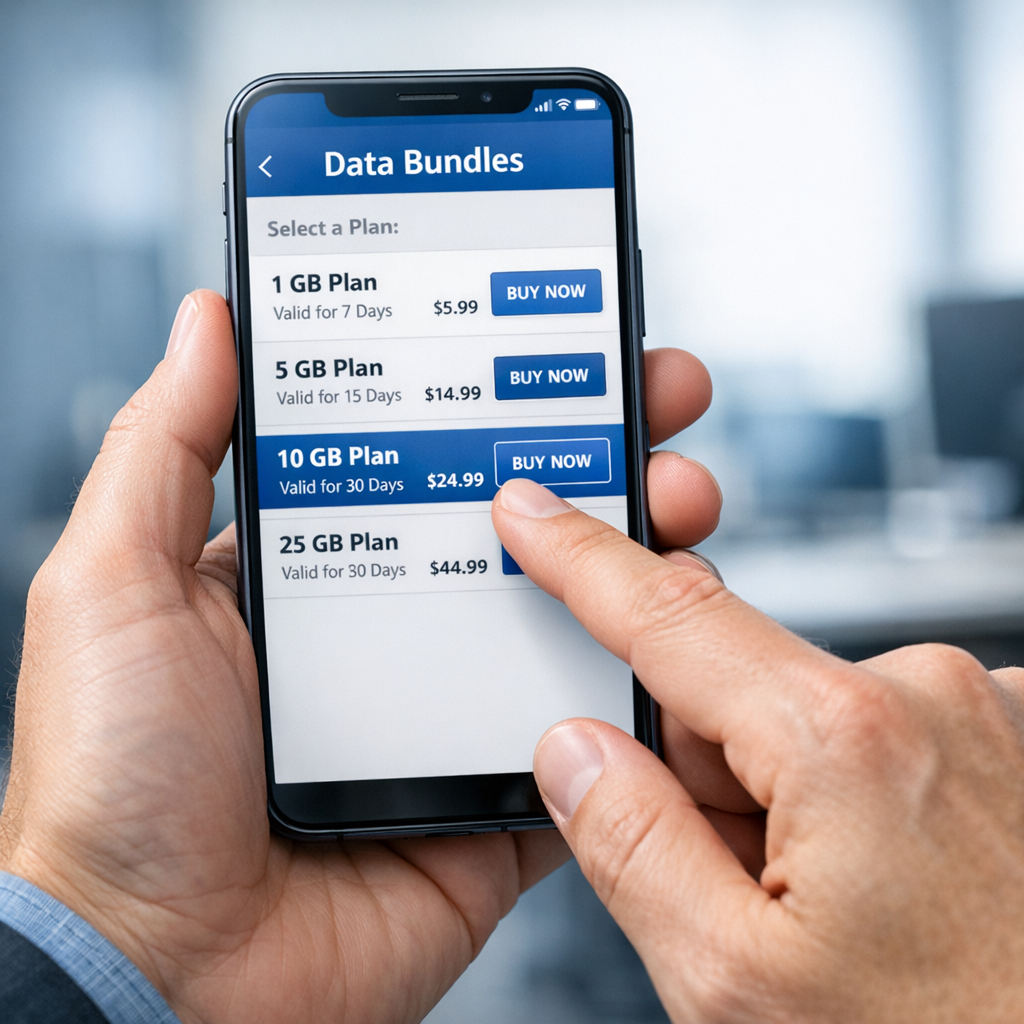
Calculate price divided by gigabytes after any bonuses. A 50GB bundle for R500 looks cheaper per GB than a 5GB R99 plan in South Africa, even if the small plan is cheaper upfront.
Watch for time-limited promotions
Night data, social-pack bundles, and app-specific offers can cut costs dramatically if your usage pattern matches them.
Prepaid versus postpaid
Prepaid markets dominate in both countries, but postpaid contracts sometimes include throttled unlimited offers that actually cost more per usable GB.
Country-by-country breakdown
Nigeria: affordability driven by aggressive bundles
Nigeria regularly ranks among the cheapest countries in Africa for mobile data on a per-GB basis. That makes it a strong market for heavy mobile users and startups relying on mobile-first distribution. Operators frequently update bundles to respond to competition, and you can find large bundles with attractive per-GB rates during promotions. For background on recent tariff moves and operator pricing shifts, see local reporting on recent price adjustments.
South Africa: higher average price, but offers deep coverage and options
South Africa’s market delivers widespread coverage and a mature fixed broadband layer in cities, but average per-GB prices are higher than Nigeria’s in many datasets. Still, consumers who buy large bundles, use fixed wireless access plans, or shop for MVNO promos can find good value. Regulatory activity and spectrum licensing are slowly shifting the landscape toward lower retail prices in time.
How to choose the cheapest plan for you
- Estimate your monthly GB need, then shop for the lowest effective price per GB for bundles of similar size. Large bundles usually win on per-GB value.
- If you mostly use audio, messaging, and occasional browsing, small cheap daily or weekly bundles are more cost effective.
- For streaming video, buy large monthly bundles, or use Wi-Fi and fixed broadband when possible.
- Always check expiry rules and off-peak windows, and consider app-specific zero-rating if available.
Real examples and where to check deals
-
For Nigeria, operator bundles change rapidly and local tech reporting frequently highlights the latest offers and regulatory decisions. For instance, recent reporting on tariff changes and bundle restructures shows how operators adjust prices to market conditions. (See local coverage summarising price adjustments and operator responses.)
-
For South Africa, check carrier bundle pages and market analysis that track per-GB averages over time, especially after spectrum auctions or regulatory announcements.
Internal resources and further reading
- For a local take on Nigerian data price changes and industry reaction, see recent coverage on MTN Nigeria pricing and sector updates. MTN Nigeria Data Price Hike
- For innovations that impact data use and free-data initiatives in South Africa, see coverage of browser partnerships and promotions. Opera Hype and free data tie-ups in South Africa
- For context on new entrants and LTE service expansions in Nigeria, read about recent network launches. VDT Communications 4G LTE launch coverage
Quick tips to save money on mobile data
- Use compression browsers or low-data modes for frequent browsing.
- Prefer Wi-Fi for large downloads and updates.
- Buy large bundles during promotions and store them for future use if validity allows.
- Compare per-GB costs across bundle sizes before you commit.
Frequently asked questions
How much does 1GB cost in Nigeria and South Africa?
Recent market studies and price trackers show Nigeria often near the bottom of African per-GB costs, while South Africa’s average per-GB price tends to be higher. The exact number depends on the dataset and year, so check the latest national pricing reports when making decisions.
Are data prices falling or rising in these markets?
Both countries see dynamic pricing. Regulatory actions and competition can push prices down, but cost pressures and currency volatility sometimes drive price increases or restructures.
Which country gives better value for streaming video?
If you measure purely by cost per GB, Nigeria often gives better per-GB value. However, streaming quality depends on network coverage and speed, where South African urban networks and fixed broadband can offer a superior experience.
Can I use the same SIM while traveling between the two countries?
Not without roaming. Roaming remains expensive. Many travelers buy local prepaid bundles on arrival for the best value.
Are there specialist low-cost providers or MVNOs I should watch?
Yes, look for MVNO promotions and app-specific zero-rating deals in both markets. These often deliver meaningful savings for targeted use cases.
How often should I re-evaluate my plan?
Every three months is a good cadence, because promotions, regulatory decisions, and operator strategies change frequently.
Next steps and resources
Want ongoing coverage of telecom pricing, spectrum auctions, and how data costs affect startups and consumers across Africa? Stay updated with comparative analysis, market trackers, and practical how-to guides at TechCity.
Read this next
Explore more local tech business coverage and guides on TechCity to track how data pricing changes affect startups and consumers across markets. Visit https://techcityng.com for daily updates and deep dives.
Conclusion
Comparing the cheapest data plans in south africa vs nigeria shows Nigeria leading on raw per-GB price in many studies, but the best value for you depends on usage patterns, expiry rules, and network quality. Do the math on per-GB costs for bundles in the size you need, watch for promotions, and lean on fixed broadband or Wi-Fi for heavy streaming. TechCity will keep tracking price changes and policy moves that shape affordability across markets.


