



Consumer attention keeps fragmenting, but the path to purchase is getting faster. Social platforms are no longer just discovery channels. They are storefronts, payment rails, product labs and creative marketplaces all at once. In this article you will get clear, practical guidance on the social commerce playbook for 2025: what’s new, what’s proven, and how to act.
Bold, digital-first brands will win this year because they combine conversational selling, smart automation and creator partnerships. Social Commerce Trends for 2025 are not only about flashy tech, they are about tightening the line between entertainment and checkout while keeping trust and payments seamless.
Why social commerce matters in 2025
Social commerce is moving from novelty to mainstream. Short-form video, integrated wallets and creator-led storefronts are making social platforms bona fide sales channels. For brands and startups, the opportunity is twofold: reach younger, high-intent shoppers where they spend time, and reduce friction between discovery and purchase.
Here’s the thing, shoppers today expect entertainment and convenience together. If your marketing funnels are still siloed from your commerce systems, you will miss conversions and valuable first-party data. Brands that stitch together social touchpoints, creator partnerships, and streamlined payments capture attention and repeat customers.
Major trends shaping social commerce in 2025
1. Live shopping goes global, and formats diversify
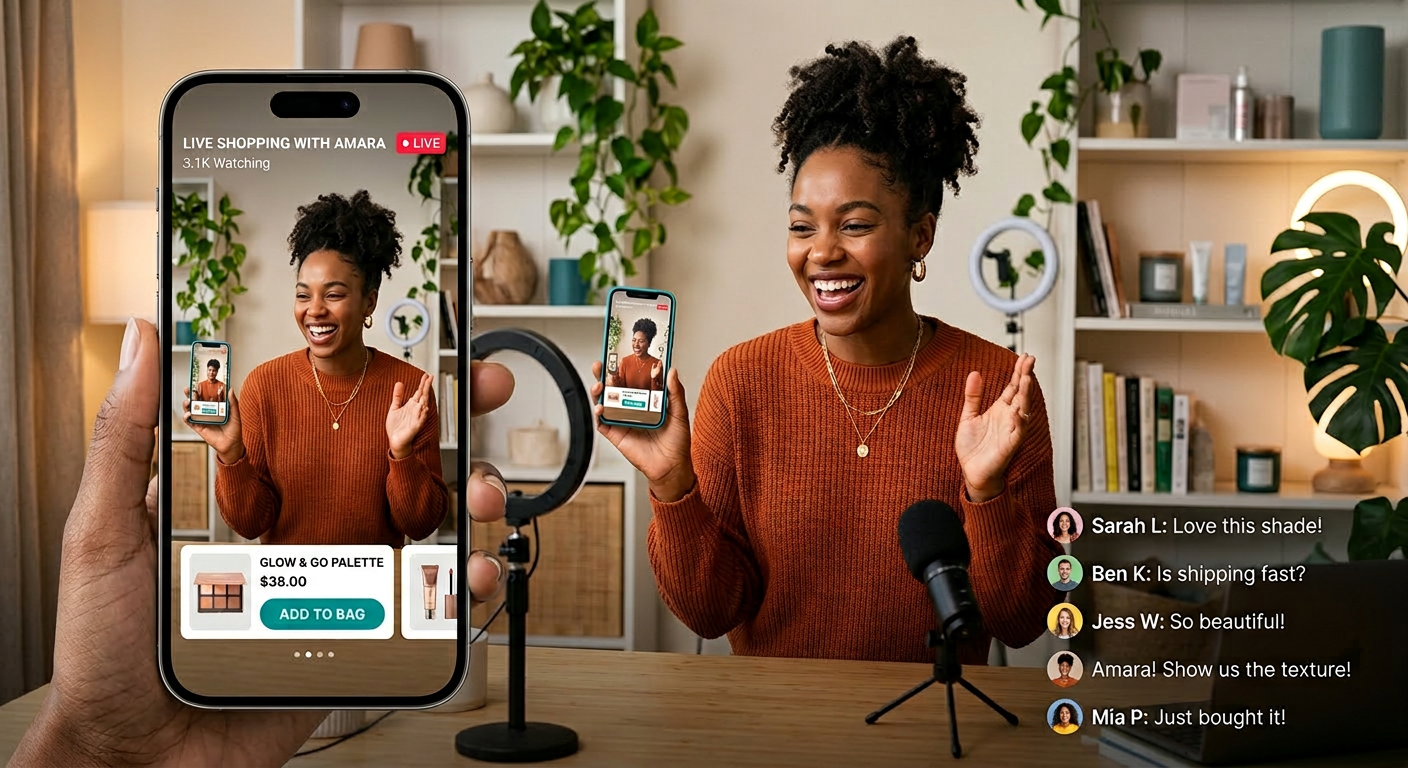
Live commerce grows beyond Asia into North America, Africa and Europe. Expect more professional broadcasts, micro-live sessions by creators, and hybrid formats on e-commerce sites. Live events double as product launches and data collection opportunities, so plan pre-event promos and post-live funnels.
2. Generative AI personalizes discovery and offers
AI moves from recommendations to product creation and dynamic offers. Brands will use AI to generate personalized bundles, on-demand visuals and conversational shopping assistants that shorten time-to-checkout. Invest in ethical data practices and guardrails, because personalization without transparency hurts loyalty.
3. Shoppable short-form video is the default catalog
Short clips with embedded product links turn every scroll into a storefront. Optimization matters: vertical-first creatives, 3-7 second hooks, and clear product tags drive performance. Treat shoppable reels and clips like paid media, with rigorous A/B tests.
4. Creator-led commerce becomes measurable and scaled
Creators evolve from affiliate links to full mini-stores, co-created products and subscription communities. Platforms will expand creator monetization tools, and brands should build long-term creator relationships with clear KPIs, revenue shares, and co-branded merchandising.
5. Embedded payments and social wallets reduce checkout friction
Buy-buttons, in-app wallets, buy-now-pay-later and one-tap checkouts will increase conversion. In markets like Nigeria and other African economies, localized payment rails and mobile money integrations are game-changing. Make payments painless and compliant with local rules.
6. Privacy, trust and regulation reshape data strategies
Cookieless realities and stronger platform policies force brands to collect first-party data ethically. Transparent consent flows, clear return policies and fast dispute resolution build trust. Compliance will be as much a growth enabler as a legal requirement.
7. AR and virtual try-ons move from novelty to conversion tool
Augmented reality try-ons reduce returns and boost confidence for apparel, accessories and home goods. Use AR where it measurably improves conversion, and instrument metrics like try-on-to-purchase ratio.
How startups and brands should prioritize action in 2025
Quick wins (0-3 months)
- Add shoppable tags to your highest-performing short-form videos. Treat these posts like landing pages.
- Run a single live shopping event with a creator partner, with an exclusive discount and follow-up flow.
- Audit checkout friction and add or test one local payment method where your customers are.
Mid-term plays (3-9 months)
- Build creator partnerships with recurring content calendars and revenue-share models.
- Integrate an AI assistant for product discovery or FAQ handling, and measure assist-to-purchase lift.
- Start collecting consented first-party data, then test lookalike activations across social channels.
Strategic investments (9-18 months)
- Invest in AR try-ons for high-return categories, instrumenting ROI closely.
- Develop an omnichannel measurement stack that ties social engagement to lifetime value.
- Expand localized payment and logistics partnerships for cross-border social commerce.
Platform playbook, by category
Short-form hubs (TikTok, Instagram Reels)
Focus on discovery and trend-based creatives. Use rapid creative testing and prioritize engagement signals that feed the algorithm.
Long-form and community platforms (YouTube, Telegram, WhatsApp)
Use for detailed demos, community commerce and repeat-customer experiences. Telegram and WhatsApp are powerful for direct customer conversations and catalog sharing in many regions.
Marketplaces with social features
Integrate if your SKU mix benefits from discovery through search and social promotion. Marketplaces can amplify reach, but margin and data ownership matter.
Measurement: what to track and why it matters
- Assisted conversions from social touchpoints, not just last click.
- Creator-driven LTV versus paid ad LTV, to judge partnership value.
- Try-on to purchase and return rates for AR experiences.
- Payment success rates and drop-off by region, to identify technical blockers.
Risks and objections, handled
- "Social commerce is just a fad." Proof shows global social commerce growth and platform investments will keep momentum. It may mutate, but the core consumer behavior of buying inside social feeds is sticky.
- "Creators are too expensive." Long-term creator partnerships that include product lines, revenue share and exclusive drops often outperform one-off influencer buys.
- "We can’t measure impact." You can, with event-level tracking, UTMs, and incremental lift tests. Start small, instrument, iterate.
Resources and further reading
- Social commerce market overviews and forecasts provide useful context for planning, review recent industry reports for region-specific stats. Statista Social Commerce Overview
- Live commerce is evolving fast, and industry commentary helps shape production and format decisions. Forbes on Live Commerce Trends
- For platform-specific developments and regional regulatory news, check industry coverage and local tech outlets.
Frequently asked questions
What is social commerce and how is it different from e-commerce?
Social commerce is the direct sale of products inside social platforms, combining social interaction, user-generated content and checkout flow. E-commerce more broadly includes traditional online stores and marketplaces.
Which platforms will drive most social commerce in 2025?
Short-form platforms like TikTok and Instagram will lead discovery, while platforms with integrated wallets and large communities will drive conversions. Regional platforms and messaging apps are crucial in specific markets.
How should small businesses start with social commerce?
Start with one platform, convert best-performing posts to shoppable posts, partner with a local creator and instrument results. Keep inventory small and test fulfilment flows.
Will AR and virtual try-ons be worth the investment?
For visual categories they can cut returns and boost conversion. Run small pilots and measure try-on-to-purchase lift before scaling.
How important are local payments in emerging markets?
Extremely important. Local mobile money and wallet integrations can be the difference between a sale and an abandoned cart, especially in Africa and parts of Asia.
Can AI replace human creators and hosts?
Not entirely. AI augments workflows and personalization, while creators provide authentic narratives and trust. The best approach mixes both.
What metrics indicate social commerce success beyond revenue?
Customer retention from social channels, repeat purchase rate, creator-driven LTV and payment success rates are critical.
Grow your social commerce with TechCity insight
Want practical case studies, platform updates and regional intelligence to build your 2025 social commerce roadmap? Explore TechCity’s coverage on platform developments and market moves for actionable ideas and local context at https://techcityng.com.
Conclusion
Social commerce trends for 2025 show a landscape where entertainment, payments and product innovation meet at the point of discovery. Brands that win will reduce friction, partner with creators, and use AI responsibly to personalize experiences. Start with measurable pilots, protect customer trust and localize payments and content to your key markets. Do that, and social platforms will become your fastest route from attention to revenue.