



When Lagos births new fintech start‑ups, and Abuja hosts summits on artificial intelligence, the headlines suggest Nigeria is racing toward a digital future. This momentum is reinforced by the National Digital Economy Policy and Strategy (NDEPS), launched in 2019, which aims to improve access to services and quality of life by applying digital technologies in health, education, and identity.
At the heart of this ambition is Digital Public Infrastructure (DPI), the foundational digital systems that enable governments and businesses to deliver services efficiently and at scale. These include digital identity systems, instant payment platforms, and data exchange frameworks.
But a few hours’ drive outside Abuja, in settlements surrounding Agbaja community along Lokoja Road, a different reality unfolds. Internet connectivity is slow and unreliable, electricity is inconsistent, and many residents lack the digital skills needed to access digital services already available in cities and urban centres. Their story is largely absent from Nigeria’s digital success narrative.
Nigeria is expanding its DPI ecosystem, but digital literacy and access remain major blind spots. Without basic digital skills, devices, and connectivity, the promises of DPI stay out of reach for millions.
The DPI Promise and the Access Gap
Digital public infrastructure (DPI) powers everything from identity verification to healthcare delivery and financial inclusion. The National Identity Management Commission (NIMC) has enrolled over 123.9 million people into its National Identity System. The Nigeria Inter-Bank Settlement System (NIBSS) Instant Payment (NIP) platform processes and handles millions of daily transactions, forming the backbone of the country’s digital payments ecosystem.
These systems are designed to be interoperable, scalable, and inclusive. In theory, they enable a citizen to authenticate their identity, receive government benefits, access health services, or transfer money instantly. In practice, however, millions remain excluded.
For many in rural areas, these systems remain out of reach. Few own smartphones, many are not literate, and power cuts are common. DPI systems often assume users already have devices, skills, reliable electricity, and trust in digital platforms, which is far from true for millions. Without addressing these structural basics, DPI cannot deliver its full benefit.

The Promise of a Digital Economy
The Ministry of Communications and Digital Economy is aiming for 70% digital literacy by 2027, with plans to train 50 million Nigerians. The Ministry has launched initiatives like the Nigeria Digital Health Initiative (NDHI) aim to digitise health records for better service delivery through interoperable data systems.
By late 2025, despite not meeting the 70% target, the government also secured approvals for over 3,700 rural telecom towers to bridge the digital connectivity divide. Satellite broadband providers have launched low‑cost broadband packages, while 5G Networks roll out across Lagos, Abuja, and other cities.
Dr. Bosun Tijani, Minister of Communications, Innovation and Digital Economy, has projected that the digital economy will contribute 21% of Nigeria’s Gross Domestic Product (GDP) by 2030, up from its current 16–18%.
Speaking at the National Digital Economy and e-Governance Bill Nationwide Engagement in Abuja last year, he assured that “Together, we can ensure this Bill provides the legal foundation required to drive digital identity, e-governance, and overall digital transformation for Nigeria,” he told stakeholders.
The numbers and projections are promising. The question, however, is whether DPI-driven growth translates into meaningful inclusion for rural Nigerians?
When DPI Doesn’t Reach Rural Nigeria
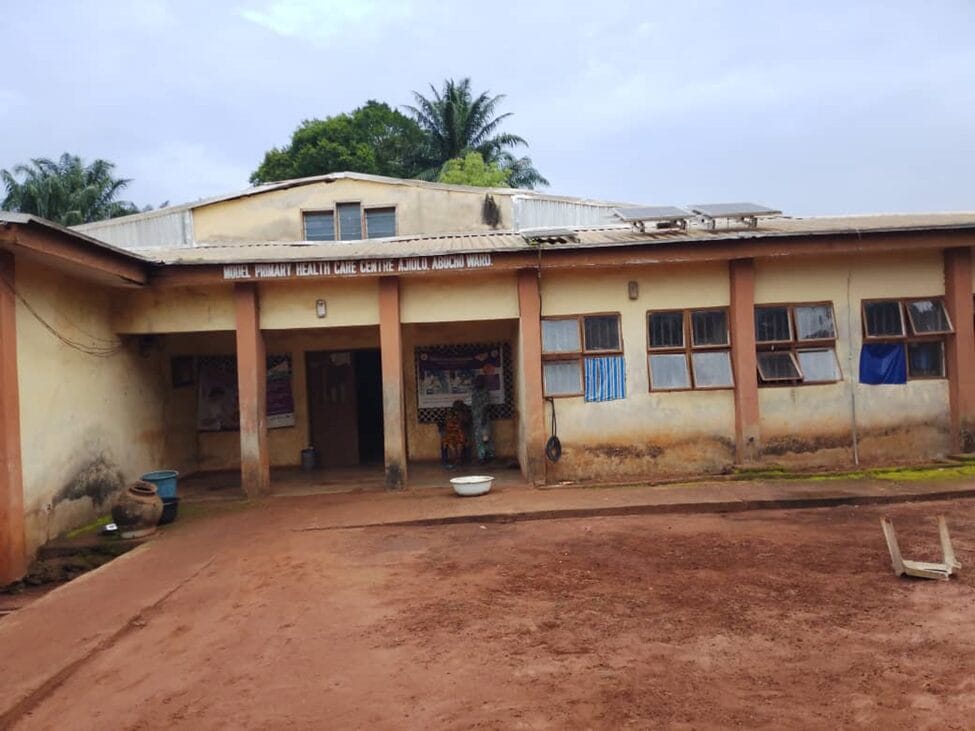
In rural Nigeria, the promise of digital transformation remains unfulfilled for millions. In Ajiolo, a small town in Kogi State, the Model Primary Health Care Centre struggles with outdated tools. When the national e‑health platform was launched, a community health officer, Tina Adamu, borrowed a nurse’s phone and downloaded the app.
“The app works,” she says, “but most people didn’t understand the icons,” she says. “How many people own a smartphone? They still write their records on paper, and they trust paper more than a picture on a screen.”
Meanwhile, in 2021, Jamila Audu, a 58‑year‑old petty trader in Ugwan Kwangwara, Niger State, owned only a basic button‑phone. When the government rolled out COVID‑19 palliative funds, recipients needed a bank verification number (BVN), a national identification number (NIN), and a bank account with a minimum of 5,000 naira balance. Jamila had none.
“I needed that money,” she says, “but they said no bank, no money.”
Both cases illustrate how DPI systems, identity, payments, and digital health can unintentionally exclude those without foundational access.
The broader data reinforces this gap. Only 54% of rural Nigerians are literate. Add technology, where only 7% of Nigerian youth have ICT skills, and the gap widens. While 58% of residents in urban households own smartphones, just 32% do in rural areas.
“Digital inclusion is much more about literacy, access, and trust than devices or apps,” says Ojo Samuel, an IT expert. “Without addressing these, technology will keep passing over rural communities.”
A Community’s Quest for Digital Literacy
In Kontagora, a 27‑year‑old schoolteacher, Noah Bako, took it upon himself to teach basic digital skills. Taking advantage of a recent two‑month school shutdown caused by bandit activity in Niger State, he uses an old laptop to run informal classes for anyone willing to learn.
“I teach them how to turn on a phone, how to type a name, how to click a picture,” he says, pointing to a chalkboard that reads “Smartphone Basics – Day 3.”
“Assimilation is slow,” he adds, “considering that many do not have a smartphone. But it feels like I give them a key to open a door they never knew existed.”
His grassroots efforts highlight a national challenge. Despite investments in digital infrastructure, Nigeria lags in basic literacy. For instance, only around 36% to 38% of Nigerian adults are considered financially literate. This low rate is cited as a major challenge to individual well-being and national economic progress.
The National Information Technology Development Agency (NITDA) acknowledges the problem, launching its Digital Literacy for All (DL4ALL) initiative to bridge gaps in education, employment, and financial inclusion. “Digital literacy should not be a privilege reserved for a few, but a fundamental skill accessible to every Nigerian,” NITDA asserts.
Grassroots efforts like Bako’s are equally important. They are proofs that, in addition to infrastructure, progress is also about empowering human minds.
Policy Gaps In Nigeria’s DPI Ecosystem
The National Digital Economy Policy and Strategy, built on eight pillars, prioritises soft infrastructure like cybersecurity, data protection, and digital identity. While these pillars strengthen the technical backbone of DPI, implementation has skewed toward infrastructure and systems, sidelining capacity-building. Although in 2025, the Ministry of Education integrated digital literacy into the junior secondary curriculum, rollout remains inconsistent, especially in rural areas.
Many Digital Public Goods (DPGs) – open digital platforms used within DPI systems – assume a baseline digital fluency that many Nigerians lack. Without foundational skills and reliable internet, these tools risk deepening inequality rather than reducing it. The Global Strategy on Digital Health (2020–2025) stresses accessible, inclusive digital solutions, but Nigeria’s digital health ecosystem struggles with poor infrastructure, weak data interoperability, and limited cybersecurity.
“To unlock the full potential of Nigeria’s digital transformation,” Samuel argues, “policy must balance infrastructure with inclusive capacity-building.”
What Can Be Done
Experts agree that bridging Nigeria’s DPI divide requiresmore than towers and fibre cables. It demands coordinated investment in people.. For instance, the government’s plan to train and certify one million Nigerians in digital literacy and emerging technology skills will accelerate the country’s digital transformation. According to the Secretary to the Government of the Federation, George Akume, “It represents the government’s commitment to deepening national digital literacy, strengthening human capital development, and promoting inclusive digital transformation in line with national development priorities.”
Also, women’s digital exclusion is both a cultural and economic issue. Girls are 1.8 times less likely to own a smartphone than boys, and they often lack a trusted environment to practice new skills. Programmes that create girls‑only learning groups have proved successful in Tanzania and could be adapted for Nigeria.
Tech developers must rethink how Digital Public Goods (DPGs) are built. Simple language, visual icons, and offline capabilities can make apps usable for low‑literacy users. Studies advocate for simple and inclusive designs to ensure technology is accessible to low-literacy users.
While expanding broadband and electricity are also essential, they should be accompanied by a clear education plan.
According to Samuel, “The Federal Ministry of Power’s Rural Electrification Agency, for instance, could integrate digital‑literacy modules into its community outreach, ensuring that once power arrives, people know how to use it for learning and commerce.
A Call for a Truly Inclusive DPI
Nigeria’s digital economy holds transformative potential for healthcare, education, and financial inclusion. But without a concerted effort to bring digital skills to the doorstep of every village, the promise will remain a story told in city boardrooms while the majority watches from the sidelines.
According to Tijani, the Communications minister, the mandate of the Nigerian government is to popularise the concept of digital public infrastructure in the system by promoting the use of technology so as to effectively deliver government services.
However, if the nation truly wants inclusive growth, the next chapter of its digital agenda must begin with a simple question: What does it take for a farmer, a mother, or a teacher in a rural village to hold the same digital key as a tech‑entrepreneur in Lagos or Abuja?
The next chapter of Nigeria’s digital future depends on the answer.
This report is produced under the DPI Africa Journalism Fellowship Programme of the Media Foundation for West Africa and Co-Develop.