

After fifteen years running the most valuable company on earth, Tim Cook is stepping down as Apple’s CEO. And the next chapter starts on September 1, 2026.
Apple confirmed the news on Monday, April 20, 2026. Cook will transition to the role of Executive Chairman. John Ternus, currently Apple’s Senior Vice President of Hardware Engineering, becomes Chief Executive Officer. Apple’s board unanimously approved the plan.
This is the biggest leadership change at Apple since Steve Jobs handed the keys to Cook in 2011. And it raises questions that matter well beyond Wall Street: What does this mean for the devices hundreds of millions of people use every day? Who is John Ternus? And for Apple users across Africa, will any of this actually change what Apple builds and who it builds for?
Here is what we know.
What Apple Actually Announced
The announcement was straightforward. Cook steps down as CEO on September 1, 2026. He stays involved as Executive Chairman, a role that will include engaging with global policymakers on Apple’s behalf. Ternus takes over as CEO on the same date and joins Apple’s board of directors.
Arthur Levinson, who has been Apple’s non-executive chairman for the past fifteen years, moves into the role of lead independent director.
Cook did not stay quiet on his way out. In a statement released alongside the news, he said of Ternus: “John Ternus has the mind of an engineer, the soul of an innovator, and the heart to lead with integrity and with honor. He is a visionary whose contributions to Apple over 25 years are already too numerous to count, and he is without question the right person to lead Apple into the future.”
Cook will continue as CEO through the summer, working directly with Ternus on the transition before handing over in September.
What Tim Cook Built at Apple
To understand why this moment matters, you have to understand what Cook’s fifteen-year run actually looked like in numbers.
When Cook took over from Steve Jobs in 2011, Apple’s market value sat at roughly 350 billion dollars. Today, Apple is a 4 trillion dollar company. That is a growth of more than 1,000 percent. Annual revenue climbed from 108 billion dollars in the 2011 fiscal year to more than 416 billion dollars in fiscal year 2025. Under Cook, Apple briefly became the first company in history to touch a 3 trillion dollar valuation.
Cook’s era was defined less by the invention of entirely new product categories and more by the disciplined expansion of what Apple already had. He scaled the iPhone into a global business, built the services division (iCloud, Apple Music, Apple TV Plus, the App Store) into a revenue engine that now generates tens of billions annually, and steered Apple through a supply chain crunch, a global pandemic, sustained regulatory pressure in the US and Europe, and a tense relationship with China, where much of Apple’s manufacturing still happens.
His critics argue that Apple under Cook moved cautiously on artificial intelligence and let competitors define the public conversation around what the next era of computing looks like. That is a fair observation. Apple Intelligence, launched in 2024, has been seen by many analysts as a catch-up play rather than a category-defining moment. The Vision Pro, despite its engineering ambition, remains a product without a mass market.
But Cook also leaves Apple as one of the most profitable companies on the planet, with industry-leading margins and a customer loyalty that most brands can only dream about. That is not an accident. It is the result of fifteen years of operational discipline that does not always make headlines but absolutely shows up in the numbers.
Who Is John Ternus?
If you have watched an Apple event in the past few years, you have seen Ternus. He has become one of Apple’s most visible public faces, doing the kind of product reveals and media appearances that Cook typically handled himself. That visibility was not accidental.

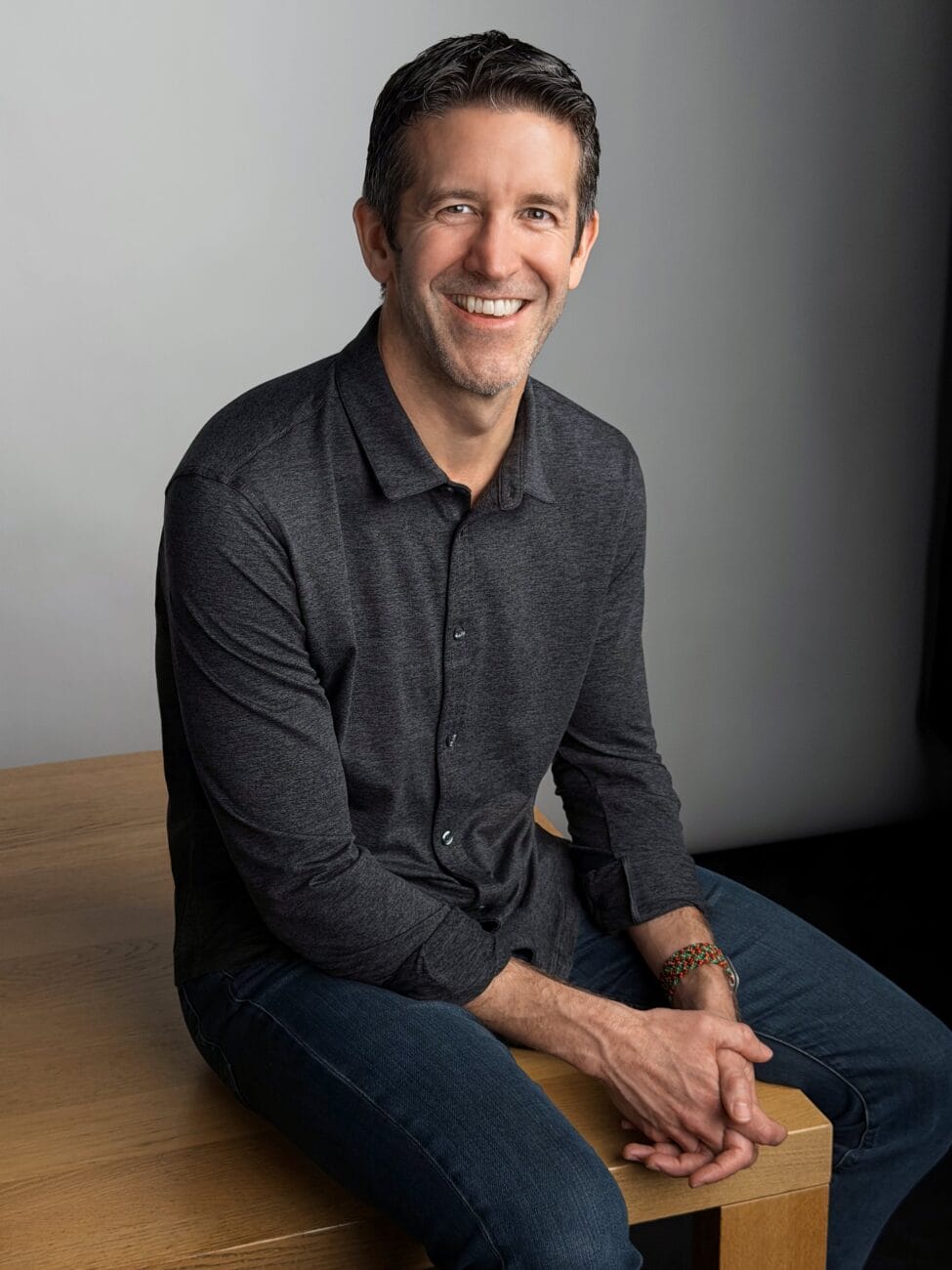
Ternus is 50 years old. He joined Apple in 2001 as a member of the product design team, starting out working on the Apple Cinema Display. He has a mechanical engineering degree from the University of Pennsylvania, where he competed on the swim team. For his senior project, he built a mechanical feeding arm operable by people with quadriplegia using head movements. That detail tells you something about how he thinks.
Over the next two decades at Apple, Ternus worked on every generation of iPad ever released. He was promoted to Vice President of Hardware Engineering in 2013, became part of the senior executive team in 2021, and since then has overseen engineering across iPhone, Mac, iPad, AirPods, Apple Watch, and Apple Vision Pro. In recent months, he took on responsibility for Apple’s design organisation and a secretive robotics unit, both of which were widely read as deliberate signals from the board about his direction of travel.
When Apple held its MacBook Neo event in New York earlier this year, it was Ternus who did the reveal, not Cook. The day after, he appeared on Good Morning America. Cook does not put his successor on national television by accident.
Apple insiders, according to Bloomberg’s reporting from earlier this year, described Ternus as someone who combines deep technical credibility with the kind of judgment and interpersonal trust needed to lead an organisation of Apple’s complexity. At 50, he is also young enough to be in the role for a decade or more, something Apple’s board is said to have weighed carefully.
What the Other Executives Were Watching
For years, Apple watchers debated whether the next CEO would come from hardware, software, or operations. Three names beyond Ternus circulated most frequently.
Jeff Williams, Apple’s longtime operations chief and the executive most often described as “Tim Cook 2.0” for his supply chain expertise, was once considered the leading candidate. Reports indicate he is preparing to retire, which effectively removes him from the conversation.
Craig Federighi, Apple’s head of software engineering and one of the company’s most publicly recognized executives, is widely respected for his role in building iOS, macOS, and Apple’s AI strategy. Most analysts consider him more likely to remain in his current role than to step into the CEO position.
Eddy Cue, who runs Apple’s services business, has been with the company since 1989 and carries enormous institutional weight. His name comes up in succession discussions, but recent reporting consistently pointed the board’s attention toward Ternus.
The hardware route winning out makes sense for where Apple is headed. The company’s most pressing questions involve physical products: what comes after the iPhone as the central device in people’s lives, where augmented reality fits into a product portfolio that has not yet found a mainstream form factor, and how Apple differentiates its hardware in a world where the gap between premium and budget devices is narrowing faster than it has in years.
What This Means for Everyday Apple Users
For most people who own an iPhone, a Mac, or an iPad, the honest answer is that nothing changes immediately. Apple’s product roadmaps are planned years in advance. The phones, computers, and tablets you will buy in 2026 and most of 2027 reflect decisions made long before today’s announcement. Cook is not leaving the building on September 1 and taking the next iPhone with him.
The medium term is where the questions get more interesting.
For Apple users across Nigeria and Africa more broadly, the leadership change reopens a conversation that never fully went away: will Apple’s next chapter include more serious attention to markets outside the premium tier? Under Cook, Apple’s pricing strategy in Africa remained largely inaccessible to most people without significant compromise. The iPhone 16 Pro starts at a price point that represents several months of salary for the average Nigerian worker. Budget-range options exist, but they are aging hardware sold at a discount, not products designed from the ground up for a different market.
Ternus’s hardware background means he understands product costs and engineering trade-offs at a level of detail that matters for this question. Whether he chooses to act on that understanding is a different matter. But the incoming CEO of a company sitting on 4 trillion dollars in market value, looking at a global middle class that is largely located outside the United States and Europe, will face that question sooner rather than later.
There is also the AI question. Apple’s approach to artificial intelligence has been built around privacy: processing data on-device rather than in the cloud, limiting what Apple knows about you. That philosophy has earned trust with users but also meant Apple moved slower than Google, Microsoft, and Meta on features that require large-scale data access. Ternus will have to decide how far Apple is willing to move from that position, and how honestly the company communicates those trade-offs to the people using its products.
The Real Question for Apple’s Next Chapter
Apple has been a company that commands loyalty in a way almost no other technology brand does. People do not just buy Apple products. They stay with them. They recommend them to their parents. They feel something when a new one is announced.
That emotional connection was built by Steve Jobs and maintained by Tim Cook, though the two men did it in completely different ways. Jobs sold the feeling of possibility. Cook sold the assurance of quality, privacy, and reliability. Both approaches worked, in their time, for the company they were running.
Ternus inherits a company that is financially dominant but creatively questioned. The next wave of computing, whether that means AI assistants, augmented reality, robotics, or something none of us have named yet, is still being defined. No one has shipped the product that changes the game the way the iPhone changed it in 2007.
The test for any new CEO is not whether they can protect what Apple has built. It is whether they can build something new that earns the same kind of trust. For the billions of people who rely on Apple products to communicate, work, and stay connected to family, that is not an abstract question. It is a personal one.
September 1 is the date. The work starts now.