

Starting a fintech company is exciting, but it is not just about building an app and hoping people trust it with money. The best founders begin with a painful financial problem, a clear customer segment, and a compliance plan that is baked in from day one.
If you are figuring out how to start a fintech startup, the good news is that the opportunity is huge. Payments, lending, wealth, compliance, and embedded finance are still expanding across Africa, the UK, the United States, and beyond, but the bar is also higher than in many other startup categories. That means discipline matters as much as ambition.
Start With A Real Money Problem
The strongest fintech startups do one thing well at the beginning. They solve a specific financial pain point for a specific group of users.
Ask yourself:
- Who is struggling, consumers, SMEs, freelancers, merchants, or institutions?
- What part of the money flow is broken, sending, saving, borrowing, tracking, reconciling, or verifying?
- Why do existing tools fail, too slow, too expensive, too confusing, or too risky?
A founder building cross-border payments for African freelancers has a very different path from one building compliance software for banks. That focus matters because it shapes your product, your licensing needs, your go-to-market, and even the investors you should speak to.
Pick A Fintech Category You Can Defend
Fintech is broad, so narrow your starting point.
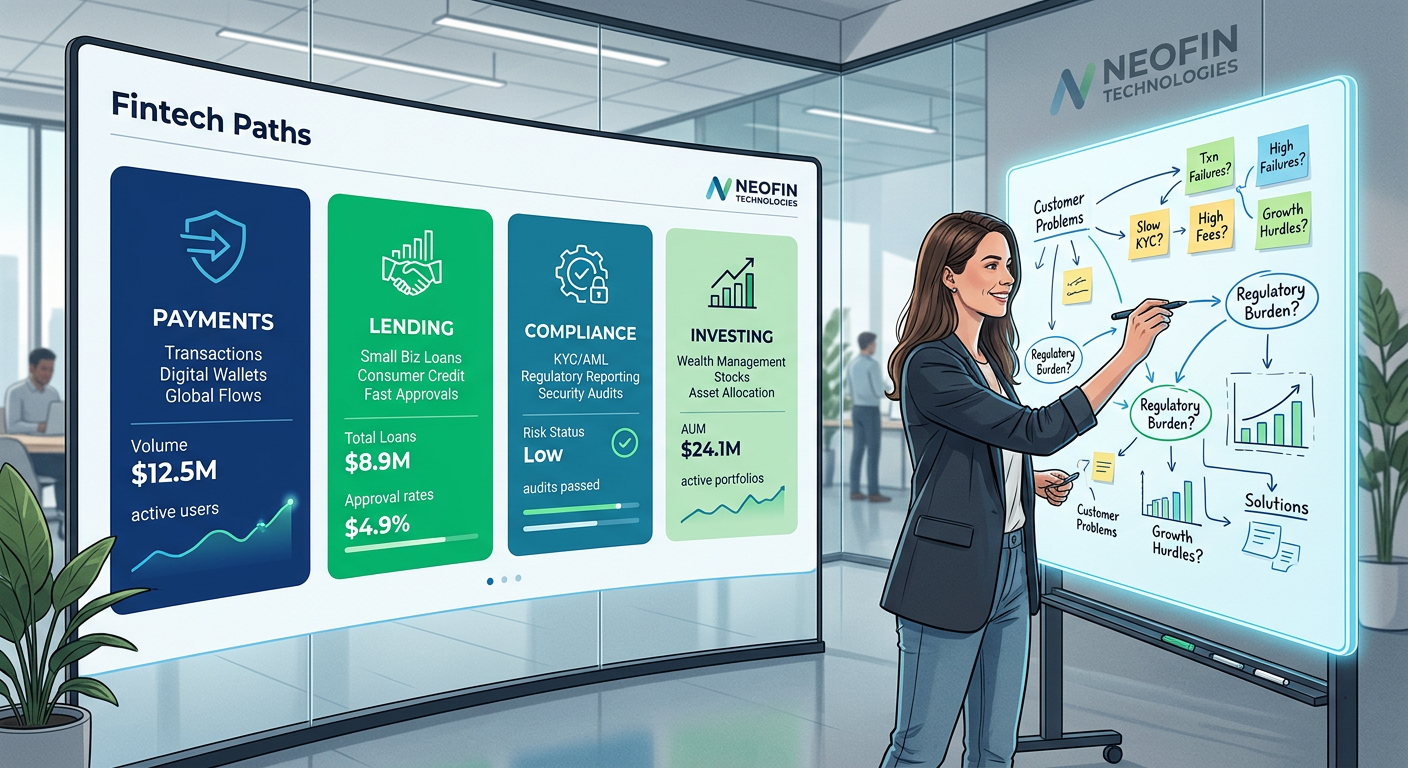
Common fintech lanes
- Payments and transfers, for merchant collections, wallets, gateways, or remittances
- Lending and credit, for consumer loans, SME financing, or alternative underwriting
- Wealth and investing, for savings, brokerage, robo-advice, or portfolio tools
- Infrastructure, for APIs, onboarding, identity verification, fraud detection, and reconciliation
- Regtech, for AML, KYC, reporting, and compliance tooling
- Embedded finance, for adding financial services inside non-financial products
TechCity has covered how companies like Paystack, LemFi, Fincra, Moove, and Regfyl each built around a sharply defined pain point, then expanded from there. That is the pattern to copy, not the brand aesthetics or the buzzwords.

Validate Demand Before You Build Too Much
Before writing heavy code, prove that people want the solution.
You can validate with:
- 20 to 50 customer interviews
- A landing page and waitlist
- Concierge service, where you manually deliver part of the experience
- Pilot users from a niche community or business network
- Early partnerships with merchants, agents, employers, or financial institutions
The goal is not perfection. The goal is evidence. If people will not sign up, prepay, or test a prototype, you probably do not have product-market fit yet.
Understand The Regulatory Path Early
This is where many founders get stuck. In fintech, regulation is not a later problem, it is a first-order design constraint.
In Nigeria, the SEC’s Regulatory Incubation program is designed for fintech models that carry out capital market activities and need a phased path to compliance, while the SEC also maintains rules for fintechs operating in the capital market. The CBN also supervises fintechs through its payments system supervision function, and its licensing frameworks cover different payment service categories. (sec.gov.ng)
What that means for you in practice:
- Know whether you are in payments, lending, investment, or capital markets
- Map the regulator before you map the roadmap
- Speak to fintech lawyers and compliance experts early
- Build KYC, AML, data protection, and fraud controls into the product
If your model touches customer funds, lending decisions, investment advice, or securities, treat compliance as part of your product, not just paperwork.
Build A Lean Product That Earns Trust
A fintech product has two jobs. It has to work, and it has to feel safe.
That means your first version should prioritize:
- Fast onboarding
- Clear pricing
- Strong identity verification
- Transaction monitoring
- Simple support flows
- Transparent error handling
Do not overload the product with every feature you can imagine. A lean checkout flow, a reliable transfer engine, or a clean compliance dashboard can be far more valuable than a bloated feature set.
Design For Risk From Day One
Money attracts fraud, chargebacks, identity abuse, and operational mistakes. The startups that survive plan for that upfront.
Your risk checklist should include:
- Fraud detection rules
- KYC and KYB verification
- Transaction limits and velocity checks
- Data security and encryption
- Manual review for suspicious activity
- Incident response and backup processes
Regfyl’s rise is a good reminder that compliance and fraud tooling are not side quests, they are a real market. The same is true for payment infrastructure and identity products. (techcityng.com)
Choose A Monetization Model That Makes Sense
A fintech startup needs a clear path to revenue. Common models include:
- Transaction fees
- Subscription plans
- Interchange or float income, where allowed
- Lending spreads
- API usage fees
- Enterprise contracts
- Premium features or tiered plans
Be careful not to copy another company’s pricing without understanding its cost base. Compliance, settlement, customer support, and fraud losses can eat margin quickly.
Raise Capital With A Story Investors Understand
Investors want more than a cool app. They want a believable market, a defensible moat, and a path to scale.
Your pitch should explain:
- The exact problem
- Why now
- Why your team
- Why your model wins
- How regulation is handled
- How you acquire users efficiently
The funding market has also shown interest in fintechs with strong infrastructure and compliance stories. LemFi’s $53 million raise and Carrot Credit’s $4.2 million seed round show that targeted fintech models can still attract capital when the problem is sharp and the execution is credible. (techcityng.com)
Go To Market One Segment At A Time
The fastest way to lose momentum is trying to serve everyone.
Start with one of these wedges:
- A single city or corridor
- One customer type, like SMEs or freelancers
- One transaction type, like collections or payouts
- One vertical, like logistics, education, or creator economy
- One channel, like partnerships, communities, or referrals
Then measure retention, repeat use, and unit economics before expanding.
Build Partnerships Early
Fintech is a network business. You will often need banks, payment processors, custodians, telecoms, merchants, or employers to make the product work.
Strong partnerships can help you:
- Reduce integration time
- Gain trust faster
- Access distribution
- Improve compliance
- Lower acquisition costs
This is why many successful fintech startups think like infrastructure companies, even when they look consumer-facing on the surface.
What To Do In Your First 90 Days
Here is a simple launch roadmap:
Days 1 to 30
- Define the problem and niche
- Interview users
- Study competitors and regulation
- Draft your value proposition
Days 31 to 60
- Build a prototype or pilot process
- Test onboarding and payments flows
- Start legal and compliance review
- Identify two to five potential partners
Days 61 to 90
- Launch a controlled beta
- Track retention and transaction behavior
- Fix friction points
- Prepare investor materials if traction exists
Final Thoughts
Starting a fintech startup is less about chasing hype and more about building trust at scale. If you can solve a real financial pain point, stay close to regulation, and ship a product people actually want to use, you are already ahead of most founders.
The opportunity is global, but the winners will be the teams that combine product discipline, compliance, and sharp execution. That is how you turn a fintech idea into a company that lasts.
Grow Your Fintech Idea With TechCity
If you are building in fintech, keep learning from the companies, funding rounds, and policy shifts shaping the market. Visit TechCity for startup news, regulation updates, and practical insights that help you move faster with fewer mistakes.
Frequently Asked Questions
Do I need a license before I launch?
It depends on what your product does and where you operate. Some models can start under sandbox or incubation frameworks, while others need direct licensing from the start.
What is the best fintech idea for a new founder?
The best idea is the one tied to a painful, frequent problem with clear willingness to pay. Payments, compliance, lending, and business cash flow tools are common starting points.
How much money do I need to start?
It varies widely. A compliance-heavy fintech may need far more capital than a narrow B2B software tool. Start lean, but budget for legal, product, security, and customer support.
Can I build fintech without technical co-founders?
Yes, but you need strong technical execution somewhere in the company, either through a co-founder, an experienced hire, or a trusted development partner.
How do I know if my fintech idea is too risky?
If you cannot clearly explain the regulatory category, your fraud controls, and how customer funds or data are protected, pause and tighten the model before launch.
What makes fintech harder than other startups?
The stakes are higher. You are handling money, identity, and trust, so product bugs, compliance mistakes, and security failures can have serious consequences.