

Growing an online store is exciting until success starts creating its own problems. Orders rise, ad costs creep up, support tickets pile in, and what once felt lean suddenly feels stretched. That is usually the moment founders realize that how to scale an ecommerce business is not just about selling more, it is about building a system that can handle more without breaking.
The good news is that scaling is absolutely possible when you move from hustle to structure. Whether you are selling in Lagos, London, New York, or across multiple African and global markets, the playbook is similar, tighten operations, improve margins, and make every growth channel work harder.
Introduction
If your store is already getting traction, you do not need more random tactics. You need a plan that turns demand into durable growth. This means improving the customer experience, expanding smartly, and making decisions from data instead of guesswork.

1. Fix Your Unit Economics Before You Grow
Scaling with weak margins is like pouring water into a bucket with holes. Before you spend more on ads or inventory, know your gross margin, contribution margin, return rate, and customer acquisition cost.
If one product performs well but barely makes money after shipping, ads, and returns, it will not scale cleanly. Focus on the SKUs that actually create profit, not just revenue.
What to track
- Gross margin by product
- Customer acquisition cost by channel
- Average order value
- Return and refund rate
- Repeat purchase rate
2. Strengthen Your Supply Chain and Inventory Planning
Fast growth exposes weak operations quickly. If inventory runs out, you lose sales. If you overstock, cash gets trapped on the shelf.
Build demand forecasts using sales trends, seasonality, and campaign performance. Work with suppliers who can meet volume without sacrificing consistency, and keep a buffer for your bestsellers.
3. Turn More First-Time Buyers Into Repeat Customers
The cheapest growth is usually the second purchase. Email flows, SMS, loyalty rewards, and post-purchase education can turn a one-time buyer into a regular customer.
This is especially powerful for ecommerce brands selling consumables, accessories, beauty, fashion, or lifestyle products. A strong retention engine reduces reliance on paid traffic and makes growth much more stable.
4. Improve Your Conversion Rate Before Increasing Ad Spend
More traffic is not always the answer. Sometimes your store simply needs to convert better.
Improve product pages with clearer photos, stronger copy, better reviews, faster checkout, and transparent shipping information. Small lifts in conversion can create a big impact on revenue without increasing ad spend.
Quick wins that often help
- Simplify navigation
- Add trust badges and clear return policies
- Show customer reviews prominently
- Use high-quality product photos and short demo videos
- Reduce checkout steps
5. Diversify Your Traffic Channels
Relying on a single source of traffic is risky. Algorithms change, ad prices rise, and one channel can stop performing overnight.
Build a mix that includes paid search, social ads, organic content, email marketing, influencer partnerships, and marketplaces where relevant. A balanced acquisition strategy gives you more control and less volatility.
6. Build a Brand People Remember
A scalable ecommerce business is not just a store, it is a brand customers recognize and trust. That matters because brand reduces price sensitivity and improves repeat purchase behavior.
Make your voice consistent, your packaging memorable, and your customer experience reliable. In crowded markets, trust is often the real differentiator.
7. Use Automation to Protect Your Time
If you are still manually sending order updates, tagging customers, or reconciling inventory, growth will eventually overwhelm you. Automation helps you scale without hiring too fast.
Start with automated emails, customer support routing, abandoned cart reminders, and inventory alerts. Then expand into forecasting, reporting, and workflow tools as your operations mature.
8. Expand Into New Markets Carefully
International or regional expansion can unlock growth, but only if your operations are ready. Payments, shipping, taxes, customer support, and returns can look very different across markets.
Test new regions with a limited product set first. Learn the local friction points, then expand based on what actually converts.
9. Use Data to Make Faster Decisions
When the business is small, intuition goes a long way. When the business starts scaling, intuition alone becomes dangerous.
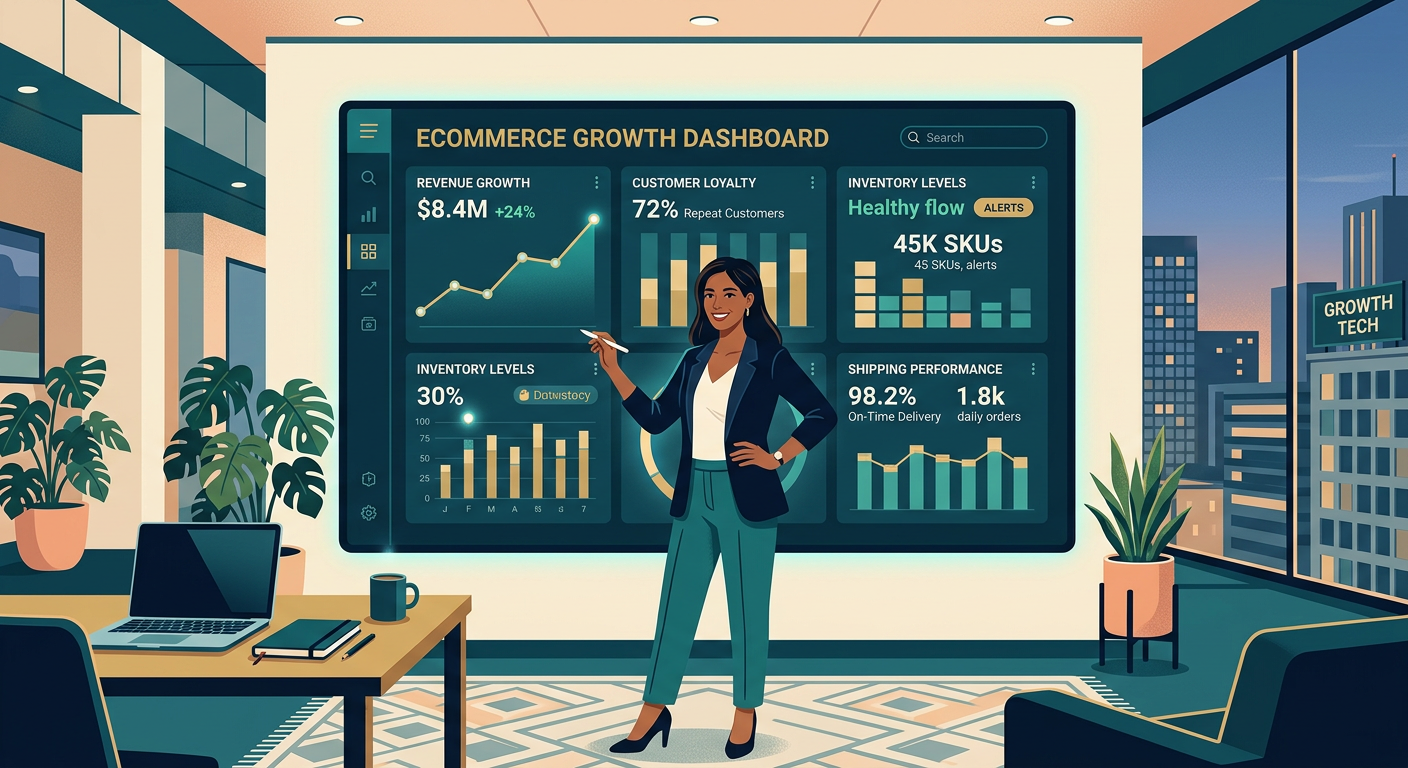
Create a simple weekly dashboard with revenue, conversion rate, average order value, CAC, repeat purchase rate, and inventory health. That gives you visibility into what is working and where growth is stalling.
10. Hire for Bottlenecks, Not for Ego
Founders often hire too early in the wrong place or too late in the right one. The smartest hires usually solve a specific bottleneck, like logistics, performance marketing, finance, or customer support.
As you grow, your job shifts from doing everything to designing the team and systems that can do the work better than you can alone.
A Practical Scaling Framework
If you want a simple way to think about how to scale an ecommerce business, use this sequence:
- Improve profit per order.
- Increase repeat purchases.
- Raise conversion rates.
- Diversify acquisition channels.
- Automate repetitive work.
- Expand to new markets only after the core engine is stable.
That order matters. Too many brands try to scale with more traffic before fixing the fundamentals, and that usually makes the problems bigger, not better.
Conclusion
Scaling ecommerce is not about chasing every growth hack you see online. It is about building a business that can absorb more demand, serve customers better, and stay profitable while it grows.
If you focus on margins, retention, operations, and brand, you create something far stronger than a short-term sales spike. That is the real difference between a store that grows and a business that lasts.
Ready to Grow Smarter?
If you are building an ecommerce brand and want more practical insights on tech, startups, and digital growth, keep exploring TechCity. Visit TechCity for more guides, market analysis, and stories that help you build with confidence.
FAQ
What is the biggest mistake ecommerce businesses make when scaling?
The biggest mistake is scaling traffic before fixing operations and margins. If your fulfillment, conversion rate, or repeat purchase strategy is weak, growth will expose the flaws faster.
How do I know if my ecommerce business is ready to scale?
You are usually ready when you have consistent demand, positive unit economics, stable fulfillment, and a clear understanding of which channels bring profitable customers.
Should I focus on ads or organic growth first?
Both matter, but organic channels can help reduce dependence on paid traffic over time. A healthy mix is usually best, especially if paid acquisition is becoming expensive.
How important is repeat business?
Very important. Repeat customers usually cost less to convert and often spend more over time, which improves overall profitability.
Can small ecommerce brands scale internationally?
Yes, but only if they carefully test logistics, payments, customer expectations, and returns. Start small, learn fast, then expand.
What tools help ecommerce businesses scale?
Useful tools often include email automation platforms, analytics dashboards, inventory systems, customer support software, and order fulfillment integrations.