

Protecting your information online is no longer optional. Every day, scammers, data brokers, and careless app permissions create new ways for personal details to leak, and once they are out, getting them back is hard.
The good news is that you do not need to be a cybersecurity expert to stay safer. A few smart habits can dramatically reduce your risk, whether you are managing your own accounts, running a small business, or protecting your family’s devices.
Introduction
Most people think online safety begins and ends with a strong password. That helps, but it is only one layer. Real protection comes from combining account security, device hygiene, and a healthy dose of skepticism.
If you want to know how to protect your data online, start with the basics that work everywhere, on your phone, your laptop, and your cloud accounts. Government guidance from the FTC and CISA consistently points to the same fundamentals, strong passwords, multi-factor authentication, careful app permissions, and avoiding phishing scams. (consumer.ftc.gov)
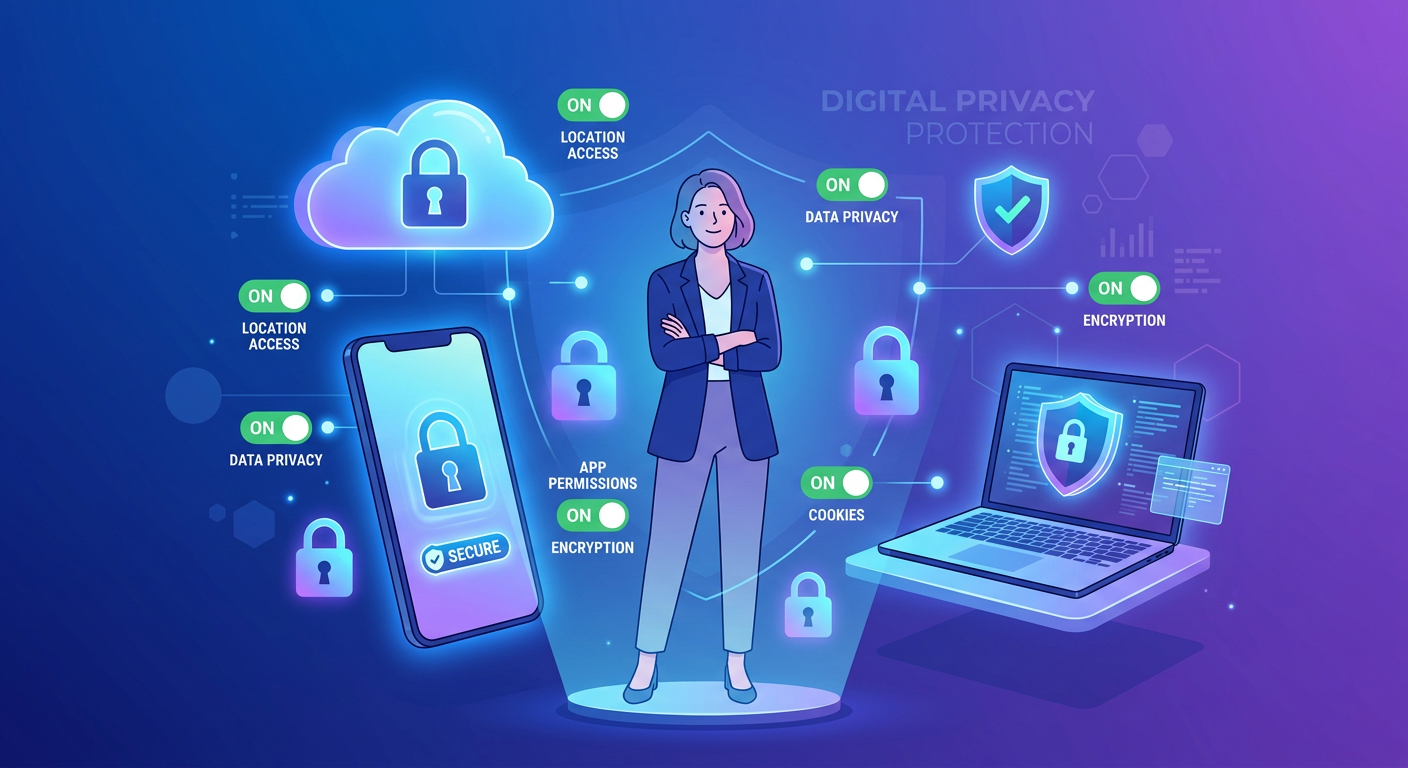

1. Use Strong, Unique Passwords For Every Account
Reusing the same password across multiple accounts is one of the fastest ways to lose control of your data. If one site gets breached, attackers often try that same login on email, banking, and shopping accounts.
Use a password manager if you can, and let it generate long, random passwords for you. The FTC recommends strong, unique passwords as one of the most important steps in protecting accounts from hackers. (consumer.ftc.gov)
Make passwords easier to manage
- Use a password manager to store and autofill credentials.
- Prefer long passphrases over short, clever passwords.
- Never share passwords by email or chat.
2. Turn On Multi-Factor Authentication
Multi-factor authentication adds a second step, usually a code or prompt on your device, so a stolen password alone is not enough. Apple says two-factor authentication is designed to keep others out even if they know your password. (support.apple.com)
This is one of the highest-impact habits you can adopt. Turn it on for email first, then banking, cloud storage, social media, and any work tools you use every day.
3. Watch Out For Phishing Messages
Phishing is still one of the easiest ways for attackers to steal your credentials. The FTC warns that scammers often pose as trusted companies and pressure you to click links, call numbers, or verify account details urgently. (consumer.ftc.gov)
Here is the simple rule: if a message creates panic, slow down. Open the company’s app or type the website yourself instead of tapping the link in the message.
Common phishing red flags
- Urgent language like “act now” or “account suspended”
- Unexpected attachments or login links
- Requests for passwords, PINs, or one-time codes
- Sender addresses that look slightly wrong
4. Keep Your Devices And Apps Updated
Security updates are not cosmetic. They often fix vulnerabilities that criminals already know how to exploit. CISA repeatedly emphasizes updating software as part of basic cyber hygiene. (cisa.gov)
Set automatic updates where possible for your phone, browser, operating system, and major apps. That one habit can close off entire classes of attacks before they reach you.
5. Review App Permissions Before You Install
Many apps ask for more access than they need. A flashlight app does not need your contacts, and a simple calculator should not need your microphone.
Check permissions before you install, then review them again later in your device settings. The FTC advises users to examine what an app wants access to and consider how data will be used and shared. (consumer.ftc.gov)
6. Limit What You Share On Social Media
Hackers and scammers do not always break in, sometimes they simply piece together clues from your public posts. Birthdays, family names, travel plans, and even photos of documents can all help someone impersonate you.
Be selective about what you post publicly, and audit old content too. Think of social media as a data source, not just a place to share moments.
7. Use Secure Networks And A Trusted VPN When Needed
Public Wi-Fi in airports, cafes, and hotels is convenient, but it is not always safe. Avoid logging into sensitive accounts on open networks unless you trust the connection and the site is encrypted.
If you travel often or work remotely, a reputable VPN can add another layer of privacy on shared networks. It is not a magic shield, but it helps reduce exposure in risky environments.
8. Back Up Your Data Regularly
If ransomware, device theft, or a broken phone wipes out your files, backups can save you. Keep at least one backup offline or in a separate cloud account so a single incident does not take everything with it.
A good backup strategy is simple: follow the 3-2-1 rule, which means three copies of your data, on two different types of storage, with one copy stored offsite.
9. Check Your Privacy Settings Often
Privacy settings change, and so do the defaults. Review what your apps, browsers, and devices are collecting, then cut back anything unnecessary.
This matters for consumers, but it also matters for founders and SMEs. Customer trust is easier to keep than to rebuild, and privacy settings are part of that trust.
10. Know What To Do If Something Goes Wrong
If you suspect a compromise, act fast. Change your password, sign out of other sessions, revoke unknown devices, and notify your bank or service provider if money or payment details are involved.
The FTC advises reporting scams and taking immediate steps to secure affected accounts. (consumer.ftc.gov)
A Practical Data Protection Routine
If you only do five things this week, make them these:
- Turn on multi-factor authentication.
- Change reused passwords.
- Update your phone and apps.
- Remove unnecessary app permissions.
- Review your recovery email and phone number on key accounts.
That small checklist covers the most common ways people lose control of their personal information.
Why This Matters For Individuals And Businesses
For everyday users, data protection means fewer scams, less identity theft, and better control over your digital life. For startups and SMEs, it also means fewer support headaches, less reputational damage, and stronger customer confidence.
In fast-growing markets across Nigeria, Africa, the UK, and the United States, online trust is becoming a business advantage. The companies that treat privacy as part of the product, not an afterthought, will win more customers and keep them longer.
Conclusion
Learning how to protect your data online is really about building habits. You do not need perfection, you need consistency.
Start with the basics, use strong passwords, enable multi-factor authentication, stay alert for phishing, and keep your devices updated. Do that, and you will close the door on most of the attacks that catch people off guard.
Explore More TechCity Guides
If you want more practical tech advice, product insight, and digital safety coverage, visit TechCity for more stories that help you stay informed and protected. Keep reading, keep learning, and make smarter moves online every day.