
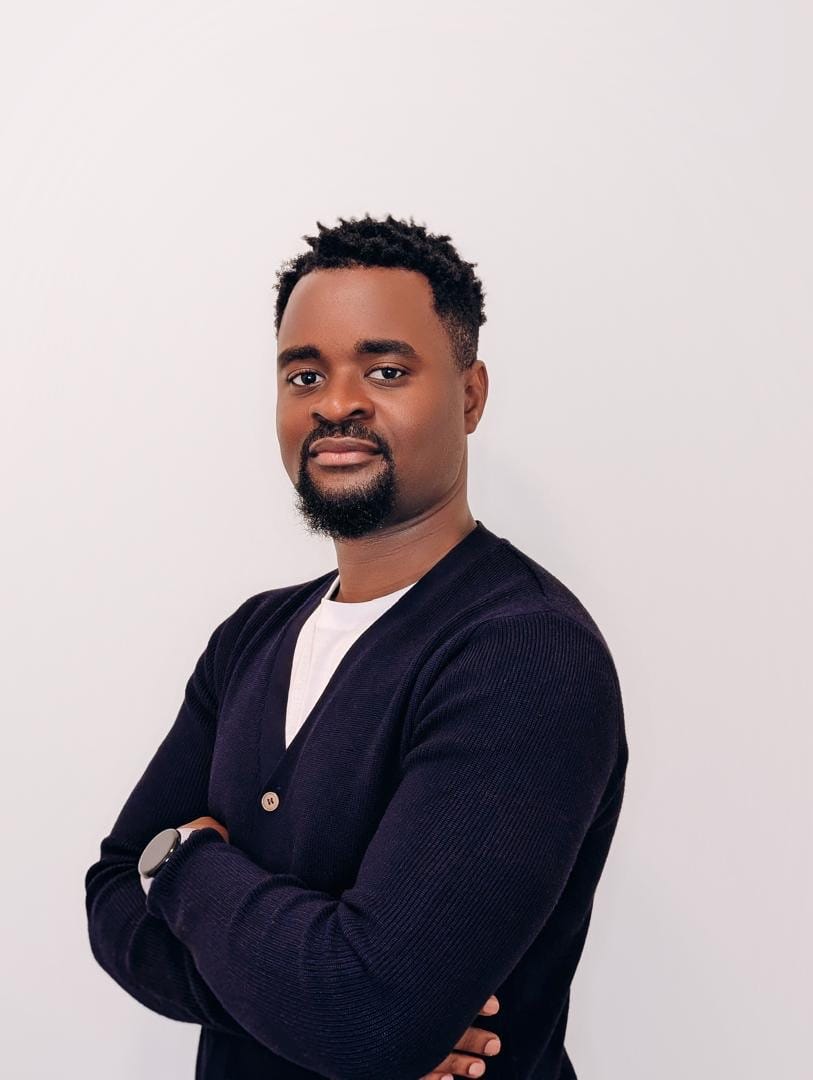
A Conversation with Tosho Ajibade on Operating Between Amsterdam and Africa’s Innovation Ecosystem
Tosho Ajibade occupies an unusual position in African tech. He’s the founder of Mentors.so, a platform that’s onboarded over 100 of Africa’s leading experts to democratize mentorship access across the continent. He previously built Tabulio, a professional networking platform that facilitated job placements and freelance opportunities for technical talent. And he does all of this while working as a Senior Full-Stack Developer at Byborre in Amsterdam, where his engineering work contributed to securing €16.9M in Series B funding.
This dual existence, building for Africa from Europe, creates a particular set of tensions that most founders don’t have to navigate. I sat down with Ajibade to understand how he thinks about context, proximity, and the challenge of building solutions for problems you’re not immediately adjacent to.
Q: You’re based in Amsterdam but building platforms specifically for African innovation ecosystems. What do you think about that distance?
A: The distance is both a constraint and an advantage, depending on what you’re optimizing for. The constraint is obvious: I’m not in the daily context where the problems I’m solving are most acute. I can’t just walk into a co-working space in Lagos or Nairobi and have spontaneous conversations that surface emerging needs.
But there’s an advantage that people miss: distance creates perspective. When you’re too close to a problem, you often solve for the specific manifestation rather than the underlying structure. Being physically removed forces you to think in systems rather than symptoms.
At Byborre, I work on textile innovation technology, designing systems that translate creative intent into physical materials. That work taught me to think about abstraction layers and how different contexts require different interfaces to the same underlying capability. That thinking directly influences how I approach building for Africa while operating from Europe.
Q: In your piece on Mentors.so, you wrote about turning “brain drain into brain circulation.” That concept seems directly related to your own position, you’re part of the diaspora yourself.
A: Exactly. I’m living the exact dynamic I’m trying to address. I left Nigeria, accumulated expertise in European tech ecosystems, and now I’m trying to figure out how that knowledge flows back in ways that actually compound rather than just evaporate.
The traditional framing is: you either stay and contribute directly, or you leave and your contribution is lost. But that’s a false binary. The question isn’t whether you’re physically present, it’s whether you’ve built the infrastructure that allows your expertise to remain accessible and useful.
When I’m facilitating mentorship sessions through the platform, I’m not trying to pretend I’m in Lagos. I’m trying to create leverage from the specific vantage point I have. I’ve navigated European tech companies. I understand how these systems work. That knowledge is valuable precisely because I can translate it for people operating in different contexts.
Q: How do you avoid building solutions that look good from Amsterdam but don’t actually work in practice?
A: This is the question that keeps me up at night, honestly. There’s a real risk of building what I call “diaspora solutions”, things that feel right from a distance but miss crucial contextual details that only reveal themselves through proximity.
My strategy is constant feedback loops. Every mentorship session generates data about what people are actually struggling with. When founders tell me about their go-to-market challenges, I’m not just helping them solve those challenges, I’m learning about market dynamics I wouldn’t see otherwise. When professionals talk about career transitions, I’m getting real-time intelligence about how employment markets actually function.
The platform itself is a listening device. It gives me systematic access to ground truth that I wouldn’t have just by following tech news or reading reports about African innovation.
Q: You’ve built platforms in different contexts, HaggleX in Nigeria, Tabulio from abroad, now Mentors.so. What did you learn about the relationship between builder location and solution relevance?
A: At HaggleX, I was physically present in Lagos, building crypto infrastructure for African markets. The proximity was useful for understanding user behavior and market dynamics. But I also saw how proximity can create blind spots, you’re so embedded in the local context that you miss patterns that would be obvious from outside.
With Tabulio, I started building from abroad, and the challenge was different. I had to be much more deliberate about validation. I couldn’t rely on ambient awareness, I had to create explicit feedback mechanisms. That discipline actually made the product development process more rigorous.
What I’ve learned is that location matters less than feedback architecture. If you’re present but not listening, you’ll build the wrong things. If you’re distant but have systematic ways of staying connected to ground truth, you can build effectively.
Q: In your essay on leadership transition, you mentioned that “the questions themselves had fundamentally changed” when you moved from engineer to founder. Has operating across geographies created a similar shift?
A: Absolutely. When I was just building features, I could optimize for local maxima, make this specific thing work for this specific user in this specific context. As a founder operating across geographies, I have to think about portability and adaptation.
The question isn’t “does this solution work?” It’s “does this solution work across different contexts, and do I understand why it works in some places and not others?”
At Mentors.so, we’re not building a monolithic solution. We’re building infrastructure that adapts to different ecosystem contexts. A mentorship session in Accra might focus on fundraising because that’s where the ecosystem is developing. A session in Nairobi might focus on scaling because there’s more established infrastructure. The platform has to be flexible enough to accommodate those differences while maintaining quality.
Q: You work at Byborre, build Mentors.so, and previously ran Tabulio. How do you manage the cognitive load of operating in multiple contexts simultaneously?
A: It’s less about managing cognitive load and more about finding the through-lines. All three contexts are ultimately about the same thing: building systems that unlock latent capability.
At Byborre, we’re unlocking design capability by creating infrastructure that makes custom textile production accessible to creators who couldn’t access it before. At Mentors.so, we’re unlocking knowledge that exists but isn’t flowing efficiently. At Tabulio, it was about unlocking employment opportunities that existed but weren’t discoverable.
The specific implementations are different, but the systems thinking is identical. How do you identify where capability exists? How do you make it accessible? How do you create feedback loops that improve the system over time?
Working in European tech also gives me pattern recognition that’s directly applicable to African contexts. When I see how companies here approach scaling, infrastructure, or user acquisition, I’m constantly asking: what aspects of this are context-dependent, and what are universal principles that could apply anywhere?
Q: What are the specific challenges of building an expert network across Africa from Amsterdam?
A: The biggest challenge is trust establishment. When you’re asking high-status individuals to join an unproven platform, proximity helps. If I were in Lagos or Nairobi, I could leverage in-person relationships, attend events, and build credibility through physical presence.
From Amsterdam, I had to be much more strategic. I couldn’t rely on serendipity, I had to make very deliberate decisions about who to approach first, how to articulate the value proposition, and how to create early proof points that would make later conversations easier.
But here’s what surprised me: distance also filtered for the right people. The experts who joined despite my physical distance were the ones who understood the vision at a conceptual level. They didn’t need to see me in person to evaluate whether the idea made sense. They evaluated the thesis on its merits.
That early filtration created a higher-quality network than I might have built through pure proximity-based recruiting.
Q: You’ve written about positioning around problems rather than titles. How does geography factor into positioning?
A: Geography is positioning, whether you acknowledge it or not. The question is whether you’re strategic about it.
I could position myself as “yet another founder building for Africa” and compete with everyone else in that crowded space. Or I could position myself as someone with specific cross-context expertise, someone who understands both European tech infrastructure and African market dynamics, and can translate between them.
That positioning only works because of the geography. If I were fully embedded in one context, I couldn’t credibly claim cross-context expertise. The distance isn’t a liability, it’s the foundation of the positioning.
But positioning only matters if it translates to actual capability. I’m not just claiming cross-context expertise, I’m using it every day. When I’m working on Byborre’s infrastructure, I’m learning about how European companies approach technical scaling. When I’m facilitating mentorships, I’m learning about how African founders approach go-to-market. Each context improves my effectiveness in the other.
Q: What’s the hardest part of operating this way?
A: The hardest part is accepting that you’ll never have perfect information. When you’re building from a distance, there’s always the nagging question: what am I missing? What crucial detail is invisible from here that would be obvious if I were there?
I’ve learned to treat that uncertainty as a feature, not a bug. It forces rigor. It forces me to build feedback mechanisms. It forces me to admit when I don’t know something and find people who do.
But the emotional challenge is real. There are moments when I question whether I should just move back, be fully present in one context, optimize for depth rather than breadth. Those questions don’t have clean answers.
Q: In your piece on brain circulation, you wrote about knowledge flowing “bidirectionally.” How does that work in practice when you’re the one building the infrastructure?
A: I’m constantly learning from the mentorship sessions happening on the platform, even though I’m not directly participating in most of them. Every session generates insights about what people are struggling with, what advice resonates, what frameworks are transferable across contexts.
But the bidirectional flow also happens at a personal level. When I’m working at Byborre on problems of scale, design systems, or infrastructure, I’m thinking about how those same principles apply to Mentors.so. And when I’m thinking about Mentors.so’s challenges around network effects, quality control, or community building, I’m applying those insights back to my work at Byborre.
The two contexts aren’t separate. They’re mutually reinforcing. Each makes me better at the other.
Q: What do you wish more people understood about building African solutions from abroad?
A: That it’s not about choosing between authenticity and distance. It’s about building the feedback systems that keep you connected to ground truth regardless of where you’re physically located.
The diaspora has accumulated enormous expertise, technical capability, strategic frameworks, operational knowledge. The question isn’t whether that expertise is valuable. It’s whether we can build the infrastructure that allows it to flow back efficiently.
Mentors.so is my answer to that question. But the broader principle applies beyond mentorship: if you’re building from abroad, you need systematic ways to stay connected to the contexts you’re building for. You need feedback loops that surface what’s actually happening, not what you think is happening.
And you need intellectual humility. Distance creates blind spots. The only way to compensate is to acknowledge them explicitly and build systems that correct for them.
Q: What’s next for Mentors.so? And for you personally?
A: For Mentors.so, we’re focused on deepening the quality of matches and expanding the types of knowledge transfer we facilitate. Right now, we’re strong on career guidance and startup strategy. But there’s a huge opportunity in technical mentorship, creative development, and cross-border collaboration.
Personally, I’m trying to figure out how to maintain effectiveness across multiple contexts without burning out. The compounding value of working at Byborre while building Mentors.so is real, but so is the cognitive load.
I think a lot about something I wrote in my leadership essay: “The transition never ends.” That applies to geography too. There’s no stable equilibrium where you’ve perfectly balanced operating across contexts. You’re constantly recalibrating, constantly learning what works and what doesn’t.
But that instability is also what makes it interesting. I’m not trying to find the perfect balance. I’m trying to build systems that create value even in the presence of imperfect information and divided attention.
That’s the actual work.
Mentors.so is currently facilitating mentorship sessions across Africa’s innovation ecosystem. The platform connects professionals with vetted experts for one-on-one guidance on career development, startup growth, and professional transitions.