



AI tools are no longer just for big tech companies with huge budgets. Today, they’re helping small businesses reply faster, sell smarter, automate routine work, and make better decisions with less stress. If you run a startup, shop, agency, or service business, ai tools for small businesses can give you back time you’d normally lose to admin.
Here’s the thing, you do not need a giant transformation project to start. The smartest approach is to pick one problem, one tool, and one measurable outcome. That could mean faster customer support, better marketing emails, cleaner bookkeeping, or a more organized sales pipeline.
Why AI Matters for Small Businesses
Small businesses usually don’t have the luxury of extra hands. One person might handle sales, customer support, social media, and invoicing all in the same day. AI helps reduce that pressure by taking over repetitive tasks and speeding up work that would otherwise slow you down.
For many SMEs, the biggest gain is not “futuristic intelligence,” it’s simple efficiency. Tools that automate responses, summarize meetings, generate content, or classify leads can make a small team feel much bigger.
Best Ways to Use AI in Daily Operations
Customer support and messaging
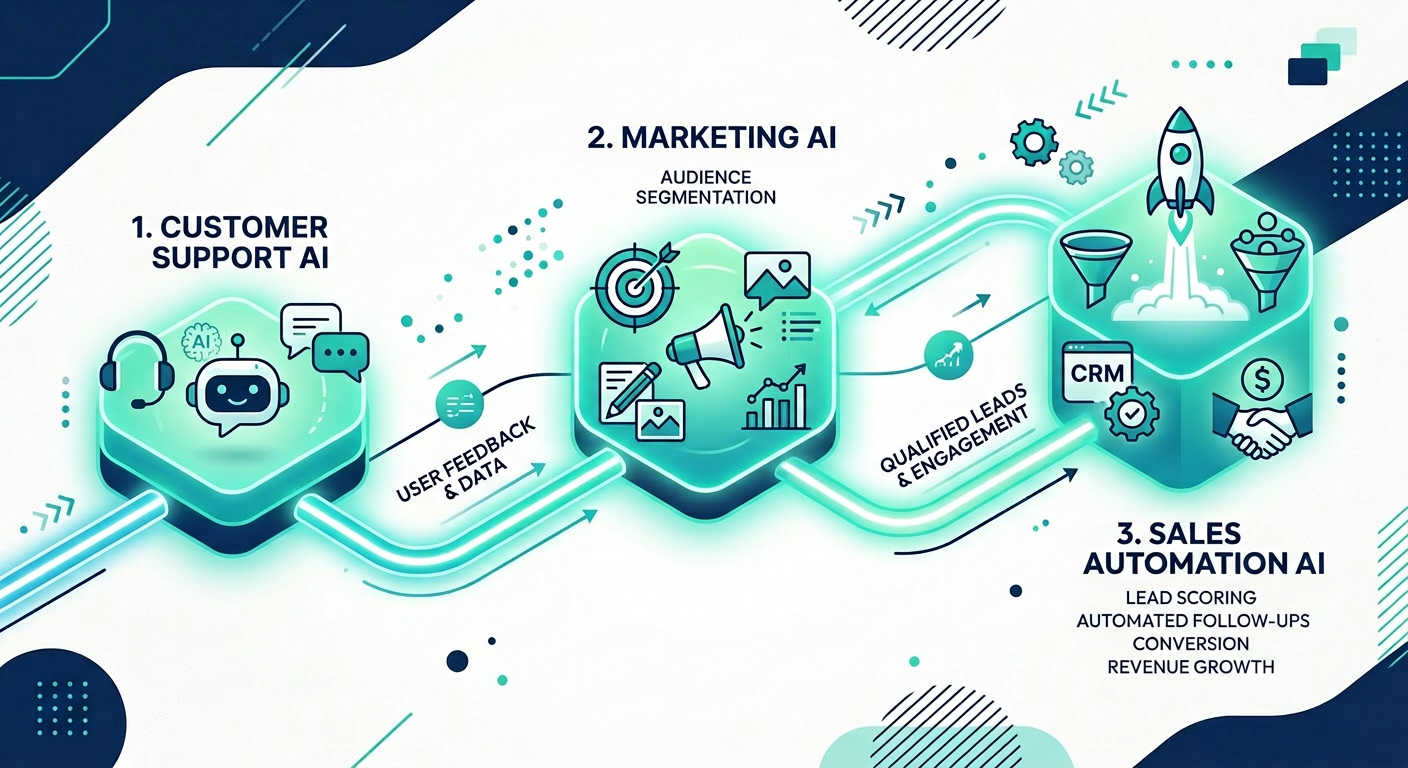
AI chat assistants can answer common questions, route inquiries, and keep your response times tight. If your business gets the same questions over and over, this is one of the fastest ways to save time without hiring more staff.
Marketing and content creation
Need social captions, product descriptions, email drafts, or blog outlines? AI writing tools can help you move faster, especially when your team is juggling several roles. Just make sure a human edits the final version so your brand voice stays sharp.
Sales and lead management
A modern CRM with AI features can help you track conversations, prioritize leads, and follow up at the right time. TechCity has covered business tools like Zoho’s Bigin for small businesses and its expanding AI suite, showing how smaller teams can access automation without enterprise complexity. (techcityng.com)
Bookkeeping and admin
AI can help categorize expenses, scan receipts, draft invoices, and reduce manual data entry. That matters because admin work is often where small businesses lose momentum, especially when cash flow is tight and every hour counts.
Practical AI Tools to Consider
ChatGPT or similar assistants
Great for brainstorming, drafting emails, summarizing notes, and creating first drafts of content. The value is speed, but the real win comes when you pair it with clear prompts and careful review.
CRM tools with built-in AI
If you manage leads or client relationships, look for a customer relationship tool that offers automation, reminders, and pipeline visibility. Zoho’s business AI announcements are a good example of how CRM platforms are folding AI into everyday workflows for companies of different sizes. (techcityng.com)
Design and content tools
Tools for generating graphics, short videos, and ad creatives can help you test more ideas without a full design team. For small businesses, that means faster campaigns and lower production costs.
Analytics and reporting tools
AI-powered dashboards can surface trends you might miss in spreadsheets. That is especially useful if you want to understand which products sell best, which customers are most active, and where your revenue is really coming from.
How to Choose the Right Tool
Start with the problem, not the brand. If you are losing time to customer messages, choose a support tool. If leads are falling through the cracks, choose a CRM. If content production is slowing growth, choose a writing or creative tool.
Also look at four basics:
- Ease of use
- Data privacy
- Integration with your current tools
- Monthly cost versus time saved
A tool is only useful if your team actually uses it. The best AI setup for a small business is usually the simplest one that solves a real bottleneck.
Common Mistakes to Avoid
Many businesses make AI harder than it needs to be. They buy too many tools, automate the wrong tasks, or expect perfect output from a first draft.
Avoid these traps:
- Trying to automate everything at once
- Using AI without human review
- Ignoring customer data privacy
- Paying for features you never use
There’s also a strategy mistake that matters just as much, failing to connect AI to business outcomes. If a tool does not save time, increase leads, improve service, or cut costs, it is probably not helping your business yet.
A Simple Starter Plan for Small Teams
If you want a low-risk way to begin, follow this approach:
- Choose one workflow that wastes time.
- Test one AI tool on that workflow for 2 weeks.
- Measure the result, time saved, faster replies, more leads, or fewer errors.
- Keep it if it clearly helps. Drop it if it does not.
That kind of disciplined rollout is often better than chasing every new feature on the market.
What This Means for Growing Businesses
For founders and SME owners, AI is not about replacing people. It is about helping small teams punch above their weight. Whether you are building in Lagos, London, Nairobi, New York, or anywhere else, the opportunity is the same, do more with less friction.
TechCity’s coverage of global business software and AI adoption reflects a broader shift, smaller companies are getting access to tools that once felt out of reach. That opens the door for better customer experience, sharper decision-making, and stronger growth. (techcityng.com)
Conclusion
The best ai tools for small businesses are the ones that solve real problems quickly. You do not need a massive budget or a technical team to get started, you just need a clear use case and the discipline to test, measure, and improve.
Start small, stay practical, and let AI handle the repetitive work so your team can focus on growth, customers, and better decisions.
Grow Smarter With TechCity
If you want more practical guides, product insights, and business tech updates, keep exploring TechCity. We cover the tools, trends, and opportunities that help modern businesses grow across Africa and the world. Visit TechCity for more technology news and how-to guides.


