

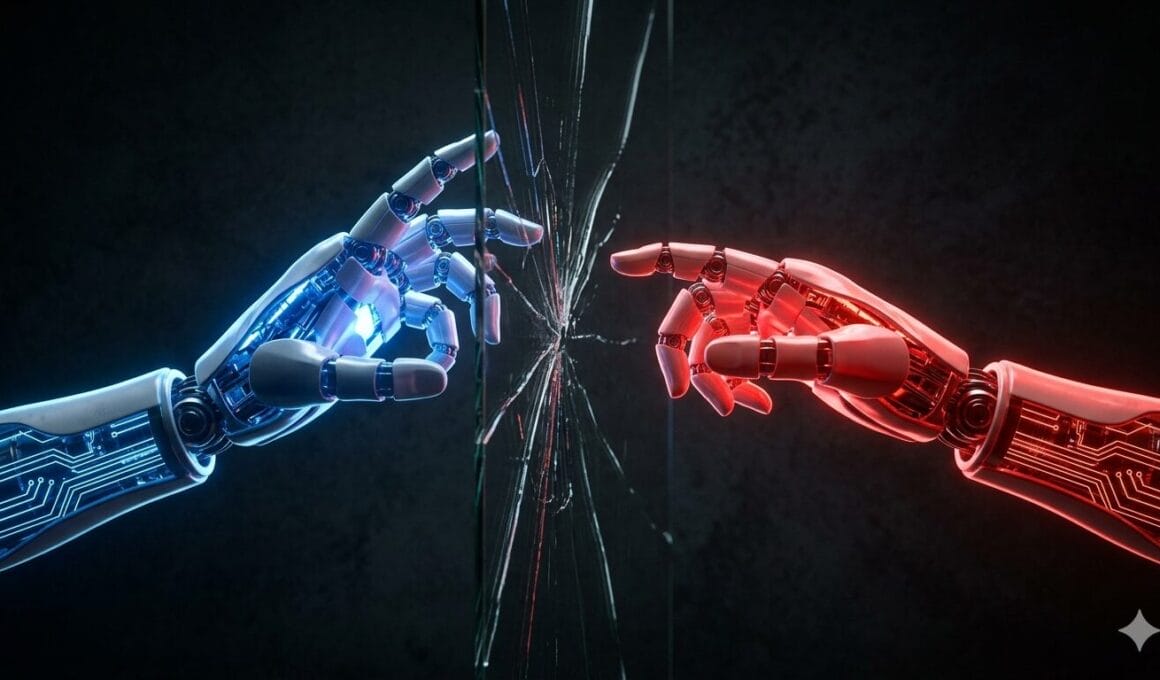
Most outlets are reporting this as a business story. However, it is not really a business story. It is a sign that the AI race is now openly a fight between governments. The apps and tools you use every day are sitting right in the middle of it.
What actually happened
On Monday, April 27, China’s top economic planner made a surprising move. The National Development and Reform Commission ordered Meta to undo its 2 billion dollar acquisition of an AI startup called Manus. The order came in a single sentence. No detailed explanation was given.
Meta had announced the Manus deal in December 2025. By the time the block came down, the acquisition was already nearly complete. In response, Meta said the deal complied with all applicable laws. The company added that it expected a resolution to China’s investigation.
Manus is not a household name. However, the company matters. It builds something called agentic AI. In simple terms, this means software that can complete tasks for you, not just answer questions. Think of it as the difference between an AI that explains how to book a flight and one that actually books it for you.
Manus was founded by Chinese engineers. Before Meta came along, the company relocated its headquarters to Singapore. That move was supposed to put it outside Beijing’s reach. As of this week, that strategy did not work.
Why this is bigger than one blocked deal
If you only read the headline, this looks like one company losing one acquisition. However, that framing misses what just changed.
For years, Chinese tech founders had a clear escape route. If you wanted to raise foreign money or sell to a US company, you would move the company to Singapore, the UAE, or somewhere similar. On paper, the company was no longer Chinese. Investors and buyers treated that paperwork as the final answer.
This week, Beijing said the paperwork no longer counts. In addition, the Chinese government banned two Manus co-founders, Xiao Hong and Ji Yichao, from leaving the country during the probe. So the message to other Chinese AI founders is now clear. Where you incorporate is no longer the deciding factor. Where you came from is.
As one Singapore-based analyst described it, the block is a “clarifying moment.” In other words, the era of Chinese AI talent quietly moving to US tech companies through a Singapore stopover is closing.
What this has to do with you
Here is where the story gets personal. Most people do not own Meta stock. Most do not work in AI policy either. However, almost everyone uses tools that are now caught in the middle of this fight.
The AI products you actually use, such as ChatGPT, Gemini, Meta AI, and Copilot, are built on two things: chips and talent. The United States controls most of the cutting-edge chips. China, meanwhile, has been a major source of AI talent. For years, US companies could quietly acquire the best Chinese AI engineers regardless of borders. That arrangement is now breaking down.
As a result, here is what you will likely notice over the next year or two:
- Slower or different feature rollouts. When the US restricts chip exports and China restricts talent and technology, both sides build narrower tools. Therefore, some features may launch later in your country, or not at all.
- Two separate AI ecosystems. Western AI products and Chinese AI products are increasingly built on completely different systems. So the assistant on your phone may soon have no overlap with one built on the other side of this divide.
- More government in your tech. Decisions about which AI tools you can access are now being shaped by national security agencies, not just product teams. This is already happening, and it will accelerate.
None of this is abstract. It follows the same logic that already shapes which apps work in which markets. TikTok ban debates, Huawei restrictions, the race to build data centers across Asia, Africa, and the Middle East: these are not separate stories. They are all chapters of the same one.
Three things worth thinking critically about
The real Critical Thinking question this week is not who won and who lost. Instead, it is what we should actually be asking.
First, who decides what counts as a national asset? Manus moved to Singapore. Its founders were operating internationally. Yet Beijing is now saying that does not matter. Because the technology and the people originated in China, the state still claims authority over them. Other governments are watching this and asking whether they should do the same with their own tech talent.
Second, what happens to founders caught in the middle? Two Manus co-founders were banned from leaving China during the investigation. Founders who relocated abroad must now ask whether their home country still considers them subject to its rules. Five years ago, that question barely existed. Today, it is a real risk for engineers anywhere with a strong AI scene.
Third, what does this mean for genuinely independent AI? If every major AI startup gets pulled into a US-China tug-of-war, the space for AI built somewhere else gets squeezed. Countries across Europe, South Asia, Latin America, the Gulf, and Africa are all trying to build their own AI capacity. Africa’s data center ambitions are one clear example. However, all of these efforts depend on not getting absorbed into either side’s strategy.
The timing is not a coincidence
This decision did not happen on a random Monday. It came weeks before a planned summit between US President Donald Trump and China’s Xi Jinping. Beijing chose this moment deliberately. It released a one-sentence statement with no further explanation, knowing exactly how it would land.
That is a deliberate signal. So expect more of it. The next year will likely bring more blocked deals, more restrictions on US companies in China, and more pressure on the neutral countries where founders have been trying to build independent ground.
Meanwhile, the AI products you use will keep rolling out new features. The marketing will not mention any of this. However, the engineering decisions behind those products are now being made with one eye on which government might block what next.
The honest takeaway
If you have ever thought “why do I need to care about geopolitics, I just want to use the apps,” this week is your answer. The apps are the geopolitics now.
You do not need to become an expert in trade policy. However, you should be skeptical of any AI product launch described as if it happened in a vacuum. None of them do anymore.
For Meta, this is a costly setback in a race they were already behind in. For Manus, the future is deeply uncertain. For everyone else, the lesson is simpler. The map of who builds the technology you use is being redrawn this year. And the people doing the redrawing do not work for the tech companies. They work for governments.
Pay attention to that, even when the headlines keep calling it a business story.
Related reading on TechCity
- Africa’s Data Centre Ambition: The Transmission Problem Nobody Talks About
- 5 Ways AI Is Helping Governments and Businesses Become More Sustainable
- Earth Week 2026: Sustainable Tech Worth Supporting, and the Brands Just Greenwashing
Frequently Asked Questions
What is Manus and why did Meta want to buy it?
Manus is an agentic AI startup. In plain terms, it builds software that can complete tasks on a user’s behalf, not just answer questions. Chinese engineers founded the company. Before Meta moved in, Manus relocated to Singapore. Meta then announced a deal to acquire it in December 2025 for around 2 billion dollars. The goal was to use Manus technology to build better AI agents and compete more directly with rivals like Microsoft and OpenAI.
Why did China block the deal if Manus is based in Singapore?
China’s National Development and Reform Commission ordered the block on April 27, 2026. It cited foreign investment laws, without offering further detail. Even though Manus is incorporated in Singapore, Beijing argued that the company’s Chinese-origin technology and talent are a national asset. As a result, this sets a precedent. Where a Chinese-founded company is legally registered no longer determines whether it can be sold to a foreign buyer.
How does this affect everyday AI users around the world?
You may not notice changes right away. However, over the next year, expect slower or geographically limited feature rollouts. Also expect more divergence between Western and Chinese AI ecosystems. Government decisions will shape which tools are available where. In short, the AI products you use are now being influenced by trade restrictions and national security policy, not only by product teams.
Is this the beginning of a wider US-China AI split?
Most analysts believe it is. The block came weeks before a planned Trump-Xi summit. It also follows months of escalating restrictions on both sides, including US chip export controls and Chinese probes into outbound tech deals. The likely outcome is two parallel AI ecosystems with limited overlap, rather than the more integrated global market that existed five years ago.


